
Blog
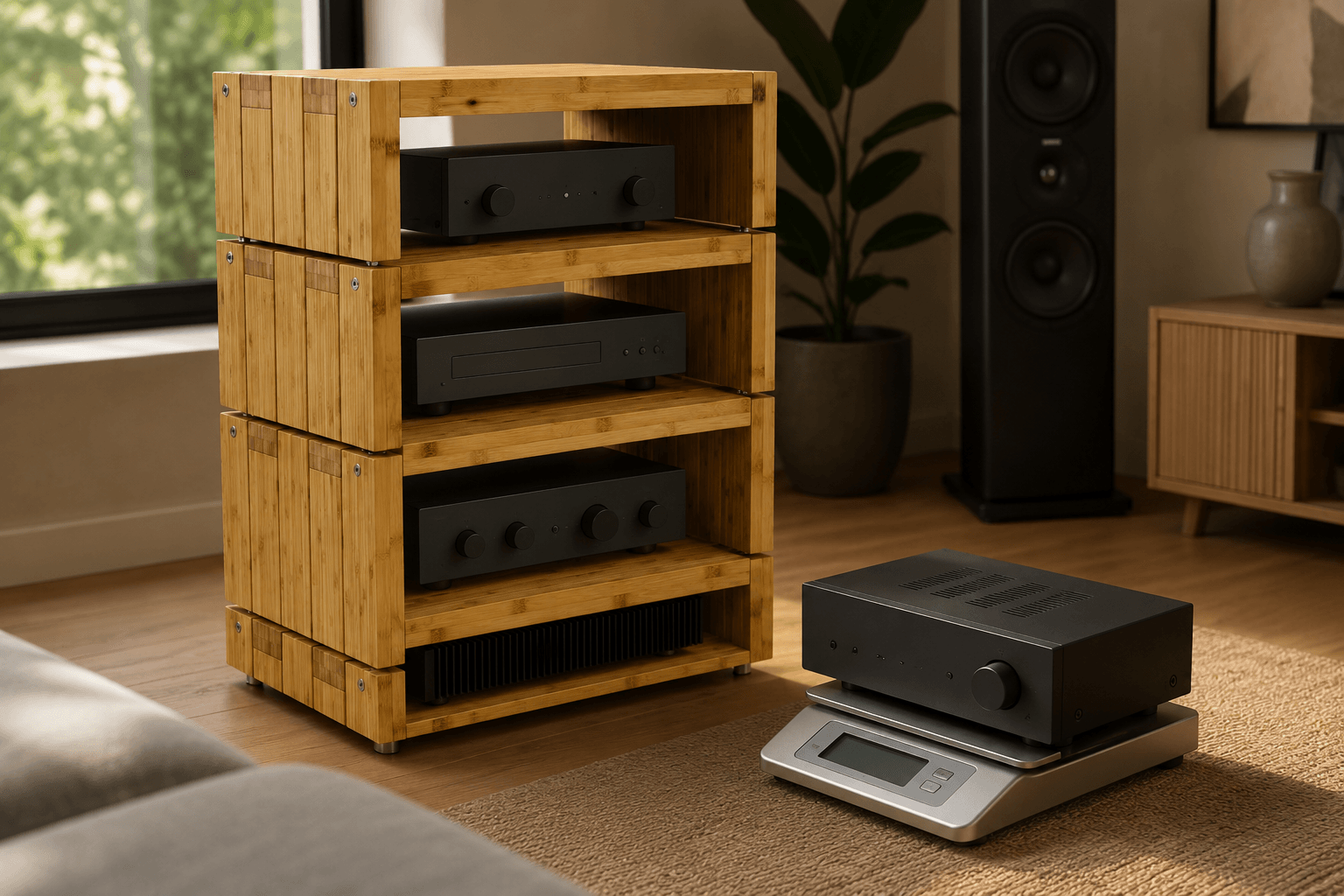
How much weight can a HiFi rack support? Safely checking load capacity
There is rarely a universal solution for properly assessing the load-bearing capacity of a HiFi rack. A HiFi rack must suit the actual equipment, the flooring, and how the room is used; therefore, a good selection process begins with a brief assessment of these factors rather than with the color of the furniture.
Those wishing to compare suitable models will find a variety of designs in the “HiFi Racks” category. However, it is best to first establish your own requirements so that technical specifications can be meaningfully evaluated.
Record the weight of the equipment for the HiFi rack
Take into account the weight of the equipment—based on technical specifications—as well as accessories, external power supplies, and additional shelves. Ensure that the equipment feet rest fully on the surface. Small contact areas can concentrate the load; additional plates or spikes should only be used if they are suitable for the system. Heavy components require a stable base. The manufacturer Atacama offers sturdy Hi-Fi racks, such as the
Elite Eco24 with a load capacity of up to 80 kg per shelf.
Practical check: Apply the requirements to the existing equipment and the intended location. Note down any missing dimensions or manufacturer specifications before committing to a HiFi rack.
Compare the load capacity of each HiFi rack shelf
The permissible load for the specific level is crucial. For a practical test, mentally run through the intended setup: inserting the device, connecting cables, operating it, and removing it again. If any of these steps require improvisation, it is worth considering a different arrangement.
Factor in a safety margin for the HiFi rack
Do not consciously exceed limit values, especially if devices are changed later or are subjected to brief loading when they are inserted. Document the current occupancy with device weight and level spacing. In the event of an expansion, it can be quickly checked whether the loads and airways still fit.
A brief checklist containing the truly relevant figures helps here. This ensures the decision regarding the correct load capacity for a HiFi rack remains transparent and allows for updates after changing equipment without requiring a complete redesign.
Keep the center of gravity of the HiFi rack low
Heavy amplifiers and power amps generally belong at the bottom, while lightweight source components can be placed higher up. The flooring itself is also a factor in load planning; delicate parquet may require protection, and a professional assessment may be advisable for problematic floors.
Check the setup not only with the furniture empty but also with the planned equipment in place. Weight, cables, and heat alter the practical conditions and can make a configuration that initially seemed suitable uncomfortable to use.
Consider point loads on HiFi rack shelves
Small equipment feet concentrate the load; use only the pads or supports specified by the manufacturer. Compare the actual weight of the equipment with the permissible load of the intended shelf or surface. The total load capacity of the furniture unit does not replace this check.
Consider the flooring beneath the HiFi rack
Parquet, tile, carpeting, and timber-beam ceilings may require additional surface protection or a load-bearing capacity test. Additionally, evaluate edges, contact points, and connecting elements. These details often have a greater impact on daily use and durability than the material designation alone.
Conclusion: Consider the load capacity per level
The decision becomes much easier when each piece of equipment is assigned to a specific shelf. This allows you to focus on the load capacity of each shelf when purchasing a HiFi rack.
Frequently asked questions about the load capacity of a HiFi rack
Does the total load capacity apply to every shelf?
The load specified by the manufacturer for the specific level is the decisive factor.
Can a glass floor support heavy equipment?
Only if the floor is undamaged and the specified load-bearing capacity and designated support points are adhered to. Unverified concentrated loads or damaged edges must be avoided.
Why is it better to place heavy equipment at the bottom?
A lower shelf with sufficient load-bearing capacity is usually a sensible choice, as it lowers the HiFi rack’s center of gravity. Nevertheless, the specific shelf must be large enough to securely accommodate the feet of all the components.
What should you do if no load capacity is specified?
The load capacity specified by the manufacturer for the specific level is the decisive factor, not a visual assessment. Please contact us or the manufacturer directly if no load capacity is specified.
Further guides on HiFi rack load capacity
- HiFi Rack for Heavy Amplifiers – A practical guide covering heavy power amplifiers, center of gravity, and large footprints.
- Setting up a HiFi rack safely – How to load the rack from bottom to top and check its stability.
- The most common mistakes when buying a HiFi rack – How to avoid misjudging load capacity and other typical planning errors.


