
Blog
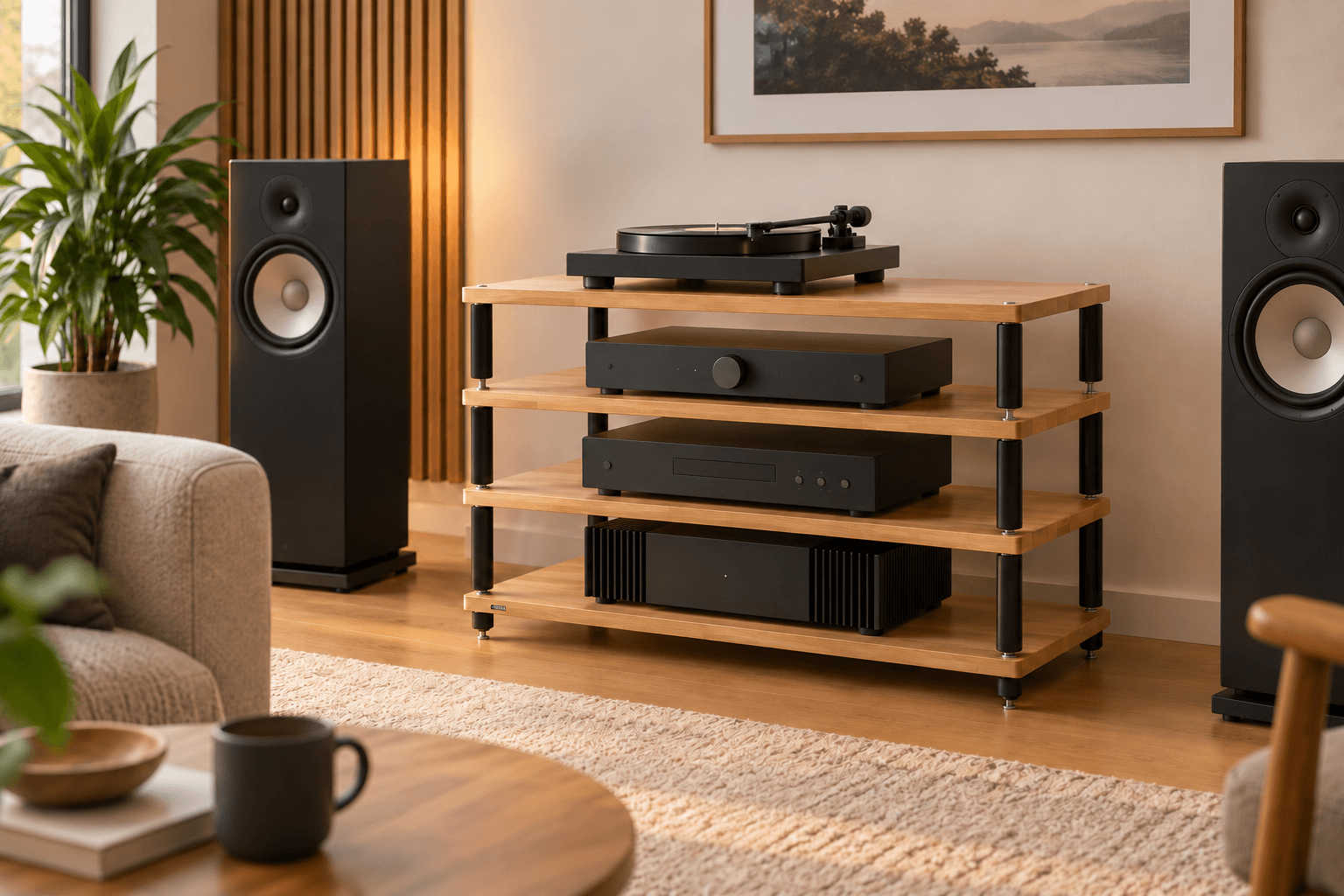
Setting up a HiFi rack in the living room
A HiFi Rack can be a visible part of the living room décor without compromising technical requirements. Good design emerges when proportions, materials, cable management, and lighting are considered in conjunction with the audio system itself. Especially when dealing with multiple components, it pays to select a location based not only on available wall space but also on speaker positioning, power outlet locations, and ease of access for operation.
Getting the proportions right for a HiFi rack in the living room
A tall hifi rack takes up little floor width and can be very efficient in narrow rooms. A lowboard has a lower profile and often integrates more easily beneath a television, though it requires significantly more wall space. Which style creates a more balanced look depends on the room height, furnishings, and size of the speakers. Atacama offers a wide range of options for accommodating hi-fi equipment in living spaces.
Coordinate the material and finish of the HiFi rack
Wooden surfaces can help integrate black or silver appliances into a space more cozily, whereas metal frames create a lightweight, high-tech look. Glass can recede visually but requires more maintenance and demands special attention regarding load-bearing capacity and edges.
Consider patterns under actual room lighting. Daylight, lamps, and dark appliance fronts alter the visual effect more significantly than product photos suggest. Maintenance requirements and susceptibility to scratches should also align with how the room is used.
Route cables in the living room as unobtrusively as possible
The best cable management is tidy yet accessible. Power, signal, and speaker cables should be long enough to ensure there is no strain on the connectors. A little slack allows equipment to be moved later without dismantling the entire system.
Power strips can be organized behind or beneath the HiFi rack, but they must remain ventilated and accessible. Cable ducts along the wall are particularly useful for speaker or network cables that you do not want running visibly across the room.
Take into account light and reflections on the HiFi rack.
Direct sunlight can make displays difficult to read and alter certain surfaces over time. Therefore, position the HiFi rack so that neither the equipment faceplates nor the turntable are subjected to prolonged, intense heat. Additionally, reflections on glass shelves or high-gloss front panels can prove more distracting in everyday use than in a showroom setting.
Indirect lighting can effectively showcase the system, but it should not block ventilation slots or direct additional heat onto sensitive equipment.
Decoration that poses no risk to the hifi system
A hifi rack can certainly look homely, but plants, candles, textiles, or heavy decorative objects do not automatically belong on every available surface. Water near electronics, heat sources next to cables, or obstructed ventilation openings are avoidable risks.
Instead, opt for wall art, a light fixture mounted with clearance, or a few lightweight objects on areas not required for ventilation or operation. This preserves the unit’s residential feel without compromising its functionality.
Planning the HiFi rack and speakers as an integrated system
The hifi rack should not force you to place the speakers awkwardly close together or asymmetrically. Position the speakers and the listening spot first based on the layout of the room, and then choose a suitable location for the electronics.
Maintaining distance from strong sources of vibration is also important for turntables. Furthermore, a well-chosen rack position allows for short cable runs without requiring the system to be placed in the middle of the room.
Conclusion for residential planning
A seamlessly integrated hifi rack blends technology with interior design, rather than subordinating one to the other. Planning dimensions, proportions, lighting, cabling, and speaker placement in tandem results in a solution that remains practical in the long run—and impresses in reality, not just in product photos.
Frequently Asked Questions About HiFi Racks for the Living Room
Does the hifi rack have to be placed between the speakers?
No, the electronics can also be placed to the side, provided the cable lengths and ease of operation are suitable. Speaker placement should not be compromised just to make the HiFi rack look symmetrical in the room.
Which finish goes well with black appliances?
Light woods create a striking contrast, while dark surfaces allow the technology to blend in more seamlessly. Which solution works best depends on the flooring, wall color, and the rest of the furnishings.
Is it okay to place a plant on the HiFi rack?
Only if water, soil, and moisture are reliably kept away from the electronics and no ventilation openings are blocked. In many cases, placing a plant next to the hi-fi rack is the lower-risk solution.
What is the best way to hide cables in the living room?
Short, well-routed cable paths and wall-mounted cable channels generally look tidier than large bundles behind the furniture. At the same time, there should be enough slack to allow devices to be moved for maintenance or reconfiguration.
Does a tall hifi rack look too dominant in small rooms?
That can happen, but it doesn’t have to. A tall, narrow hifi rack can take up less floor space than a wide lowboard and, as a result, even create a more airy impression.
More guides for living room HiFi racks
- Creating a minimalist HiFi corner – How to create a calm Hi-Fi setup with clear functionality and minimal visible cable clutter.
- HiFi rack or lowboard? Which style suits your system? – Compare the space requirements, operating height, and TV integration of both designs.
- HiFi rack made of bamboo, oak, or walnut? – How different wood colors and grain patterns affect the living space.


