
Blog
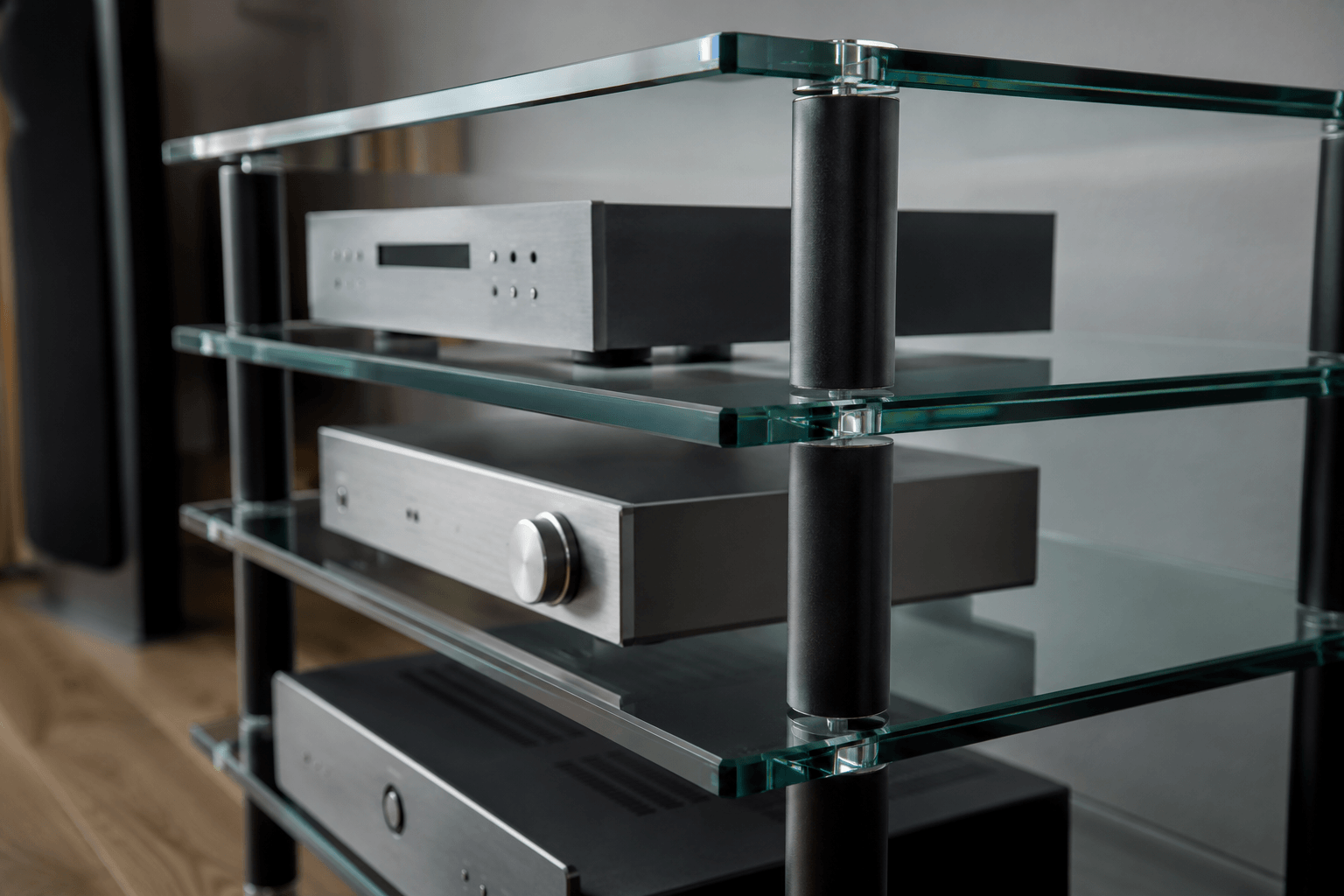
Glass HiFi rack
Anyone considering glass HiFi racks should base their choice on the equipment they already own. Usable depth, shelf spacing, load capacity, and airflow can be objectively assessed, providing a better basis for a decision than generic product claims.
Those wishing to compare suitable models will find a variety of designs in the “HiFi Racks” category. However, it is best to first establish your own requirements so that technical specifications can be meaningfully evaluated.
Check the safety glass on the HiFi rack
Obtain the glass type, thickness, support points, and approved load capacity from the product data. Compare the actual weight of the unit with the permissible load for the specific shelf level in question. The total load capacity of the furniture unit does not replace this check.
Practical check: Apply the requirements to the existing equipment and the intended location. Note down any missing dimensions or manufacturer specifications before committing to a HiFi rack.
Account for point loads on glass floors
It makes sense to place heavy components lower down, as this lowers the center of gravity. Once fully loaded, the HiFi rack should be checked again for any wobbling and to ensure even contact with the floor.
Check the edges of a HiFi rack glass shelf
Chipping or deep damage can compromise safety and should be assessed before the unit is subjected to further load. Skirting boards, doors, walkways, and power outlets must be taken into account when planning the placement. A HiFi rack might fit based on its external dimensions yet still obstruct access or block the rear during everyday use.
A brief checklist containing the truly relevant specifications helps here. This ensures the decision to choose a HiFi rack with glass shelves remains transparent and allows for updates after changing equipment without requiring a complete redesign.
Gently clean the glass on your HiFi rack
Spray the cleaner onto a cloth rather than towards the electronics. For households with children or pets, scratch resistance, ease of cleaning, and sturdy edges are practical considerations; otherwise, a delicate surface might require an excessive amount of maintenance.
Assessing the impact of glass floors on the living environment
Clear, tinted, or satin-finish surfaces create a visually lightweight look, though they may show fingerprints and cables more prominently depending on the finish. Design the rear section so that a plug can be disconnected without having to move the entire HiFi rack; ease of access for maintenance is a key factor in practical cable management.
Check the suitability of the HiFi rack for the home
If there is a high risk of impact, or if children, pets, or particularly heavy equipment are involved, a different flooring solution might be more practical. The underlying floor structure is also a factor in load planning; delicate parquet flooring may require protection, and a professional assessment is advisable for problematic floors.
Conclusion: Evaluate function and everyday use together
A HiFi rack serves primarily as a functional base for the audio system. Good planning is evident when equipment is securely positioned, heat is effectively dissipated, connections remain accessible, and future reconfiguration is possible.
Frequently Asked Questions About Glass Shelves in HiFi Racks
Can you place spikes directly onto glass?
Spikes can damage delicate floors if suitable protective discs are not used. Use only accessories compatible with the rack and the floor surface, and subsequently verify that the unit is level and stable.
Are scratches on glass merely a cosmetic issue?
Only if the floor is undamaged and the specified load-bearing capacity and designated support points are adhered to. Unverified concentrated loads or damaged edges must be avoided.
When should a damaged glass shelf no longer be subjected to a load?
Deep spalling or damage should not simply be ignored. Relieve the load on the affected floor and consult the manufacturer or a specialist retailer to determine whether replacement is necessary.
Further guides on glass and materials for HiFi racks
- HiFi rack made of wood or metal? – A comparison of alternative materials in terms of aesthetics, construction, and everyday use.
- Caring for HiFi Racks: Wood, Metal, and Glass – How to gently clean glass surfaces and protect adjacent materials.
- Making HiFi racks child- and pet-proof – Key considerations regarding glass, tipping hazards, cables, and small household items.


